AI and automation are widely expected to replace routine and repetitive administrative work, freeing people to move up the value chain. The catch is that routine admin has also acted as a leadership nursery: many careers started with 6 to 12 months of coordination work before bigger responsibilities arrived. In hiring, an interview scheduling app or book calendar app can remove the back and forth without removing development, but only if you intentionally redesign the workflow. In this post, I share a practical model we use: automate the coordination and first touch steps with tools like StrategyBrain AI Recruiter, then reinvest the saved time into structured interviewing, coaching, and decision quality. This is an operating playbook, not a vendor list or pricing guide.
The hidden role of routine admin
The popular narrative says routine work is “low value” and therefore safe to automate. That is often true for output, but it misses the input side: routine work is also where people learn how organizations actually run. In many offices, early career employees start as the person who coordinates calendars, tracks follow ups, and keeps projects moving. That work teaches prioritization, stakeholder management, and communication under constraints.
When AI removes those tasks, the organization can become more efficient in the short term. However, it can also remove a structured on ramp for future leaders. The result is not that people cannot grow, but that growth becomes less automatic and more dependent on deliberate coaching and redesigned roles.
Why hiring feels the impact first
Recruiting operations contain a lot of coordination. Scheduling screens, rescheduling, sending reminders, collecting availability, and confirming time zones are repetitive by nature. That makes hiring one of the first places teams deploy automation, especially when hiring volume is high or when recruiters support multiple roles.
In our experience, the risk is not the automation itself. The risk is what happens when teams treat automation as a headcount substitute rather than a capacity multiplier. If you remove coordination work but do not reinvest the time into better interviews, better candidate communication, and better hiring decisions, you get speed without quality.
Where an interview scheduling app helps and where it does not
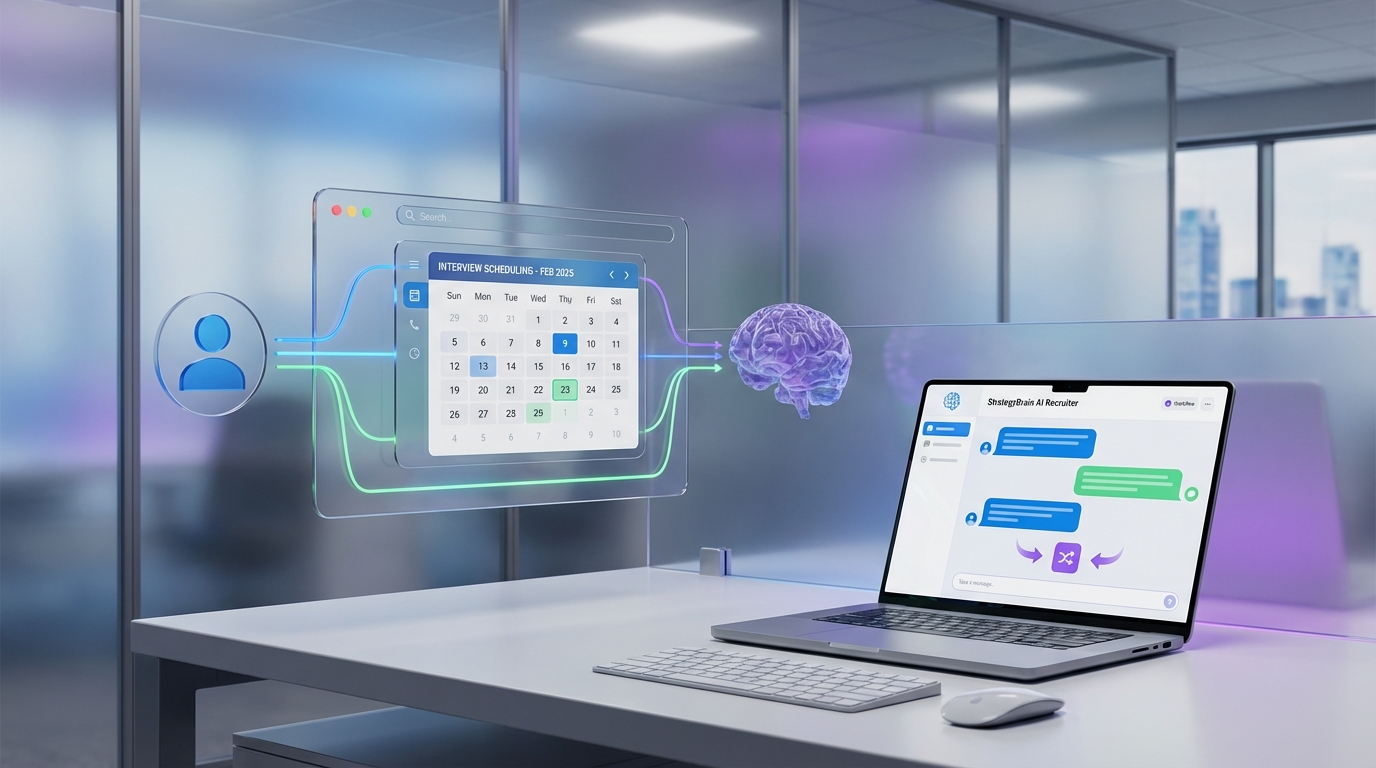
An interview scheduling app is software that automates interview booking by syncing calendars, offering available time slots, and confirming meetings. A book calendar app is a broader term for tools that let someone reserve time on your calendar, often used for sales calls, support, and interviews.
What it reliably improves
- Time to schedule: fewer emails and fewer manual handoffs.
- Candidate experience: clear options, fewer delays, fewer missed confirmations.
- Recruiter focus: more time for role intake, interview prep, and stakeholder alignment.
What it does not solve by itself
- Candidate qualification: booking a call is not the same as confirming fit.
- Consistency in evaluation: you still need structured interviews and scorecards.
- Leadership development: if junior staff no longer coordinate, you must create new learning loops.
If you are choosing the best scheduling software for small business, the key question is not only features. It is whether the tool fits your operating model: who owns scheduling, how you handle time zones, and how you keep candidates informed when plans change.
A balanced workflow: human development plus automation
Here is the workflow redesign that has worked best for us when automation increases. The principle is simple: automate coordination, then deliberately assign development work that used to come “for free” through admin tasks.
Step 1: Automate the coordination layer
- Use an interview scheduling app to offer interviewer availability and confirm meetings.
- Standardize templates for confirmations, reminders, and reschedule messages.
- Define escalation rules for exceptions, such as executive interviews or urgent backfills.
Step 2: Protect the human layer that creates signal
- Use structured interviews with consistent questions per role level.
- Train interviewers on calibration and bias reduction.
- Require written feedback before debrief to reduce groupthink.
Step 3: Replace lost “apprenticeship” with explicit growth tasks
- Interview shadowing: junior team members observe screens and write practice scorecards.
- Candidate communication ownership: juniors own updates and expectation setting, with manager review.
- Process improvement projects: juniors analyze drop off points and propose fixes.
How we use StrategyBrain AI Recruiter with LinkedIn workflows
We use StrategyBrain AI Recruiter as the automation layer for LinkedIn outreach and early conversation handling. It automatically connects with candidates within defined search criteria, introduces the opportunity, answers common questions about the role and company, confirms interview interest, and collects résumés and contact information from interested candidates. This is where automation can remove a large amount of repetitive messaging without reducing the quality of the human interview stage.
Two capabilities matter most operationally. First, it supports 24/7 multilingual communication, which reduces delays when candidates respond outside business hours or in different time zones. Second, it can be managed across more than 100 LinkedIn accounts, which is useful when teams need scalable outreach capacity while keeping governance and consistency.
Importantly, we do not treat this as “set and forget.” The AI can identify willingness to communicate or interview, but final qualification still requires a recruiter review of the résumé and role requirements. That boundary is healthy because it keeps accountability with the hiring team while still removing the repetitive parts of the funnel.
What to measure so efficiency does not kill the ladder
If you only measure speed, you will optimize for speed. To keep the career ladder intact while using automation, we track a small set of metrics that connect efficiency to quality and development.
- Time to first response: how quickly candidates receive a meaningful reply after outreach.
- Time to schedule: elapsed time from “interested” to confirmed interview on the calendar.
- Interview to offer ratio: a proxy for screening quality and interview signal.
- Candidate drop off reasons: categorized reasons for withdrawal or no show.
- Junior development hours: scheduled shadowing, calibration participation, and process work.
The last metric is the one most teams skip. If routine admin used to create learning, you need an explicit replacement. Otherwise, you will feel the gap 12 to 24 months later when you need new team leads and the bench is thinner than expected.
Common failure modes and fixes
Failure mode 1: Automation creates a colder candidate experience
When messages become too templated, candidates feel like a number. The fix is to define what must be personalized, such as role context, location constraints, and compensation ranges when appropriate, and what can remain standardized, such as scheduling instructions.
Failure mode 2: Scheduling is fast but interviews are inconsistent
Teams often buy a book calendar app and stop there. The fix is to pair scheduling automation with structured interview design, interviewer training, and a clear debrief process.
Failure mode 3: Junior recruiters lose the on ramp
If junior staff no longer coordinate, they may lose exposure to stakeholders and process mechanics. The fix is to assign ownership of candidate updates, interview shadowing, and funnel analysis so they still build judgment and communication skills.
FAQ
Is an interview scheduling app the same as a book calendar app?
Not always. An interview scheduling app is purpose built for recruiting workflows, while a book calendar app is a broader scheduling tool used across many business functions. Both can reduce coordination time if they sync calendars and handle confirmations reliably.
What is the biggest risk of automating scheduling and outreach?
The biggest risk is optimizing only for speed and losing quality signals and development opportunities. Automation should remove repetitive coordination, then you should reinvest time into structured interviews, calibration, and better candidate communication.
Can StrategyBrain AI Recruiter replace recruiters?
No. In our workflow, it replaces repetitive LinkedIn outreach and early qualification conversations, but recruiters still review résumés, make judgment calls, and run the interview process. That division keeps accountability with humans while improving throughput.
Does StrategyBrain AI Recruiter support multilingual candidate messaging?
Yes. It is designed for 24/7 multilingual communication so candidates can interact in their native language across time zones. This can reduce delays and misunderstandings during early stage conversations.
How do you keep automation compliant with privacy expectations?
Use tools that clearly state how data is handled, and set internal rules for what information is collected at each stage. StrategyBrain AI Recruiter states that customer provided data is not used to train AI models and that credentials and candidate data are encrypted and isolated per customer.
What should small businesses look for in the best scheduling software for small business hiring?
Prioritize calendar sync reliability, time zone handling, rescheduling controls, and clear candidate communications. Then ensure your interview process is structured so faster scheduling does not create inconsistent evaluation.
How do you preserve career ladder development when admin work shrinks?
Create explicit development loops: interview shadowing, ownership of candidate communications, and process improvement projects. Treat these as scheduled work, not optional extras.
What is a practical first step if our team is overwhelmed?
Start by automating one bottleneck. For many teams, that is scheduling with an interview scheduling app, then automating early LinkedIn outreach with StrategyBrain AI Recruiter. Keep the human time you save reserved for interview prep and debrief quality.
Conclusion
AI can remove routine administrative work, but routine work has also been a training ground for early career growth. In hiring, an interview scheduling app and a book calendar app can eliminate coordination friction, and StrategyBrain AI Recruiter can automate LinkedIn outreach and early conversations. The key is to redesign the workflow so the time saved becomes better interviews, better candidate communication, and explicit development opportunities for junior talent.
Next steps: map your current hiring funnel, identify the top coordination bottleneck, and automate that first. Then add one development loop for junior team members so efficiency gains do not quietly flatten your career ladder.