Recruitment online for recruiters works best when you combine clear role knowledge, transparent policies, and consistent candidate communication, then use AI to scale the repetitive parts without losing human judgment. This article distills HR Consultant Judy Slutsky’s April 11, 2024 trend update on artificial intelligence in recruiting, strategic HR, policy as a recruiting tool, contract workers, career development, compensation benchmarking, and misconduct investigations, then turns those themes into practical online recruiting moves. We also explain how StrategyBrain AI Recruiter supports modern LinkedIn recruiting by automating initial outreach and follow up, answering candidate questions about role, company, and compensation, and collecting résumés and contact details so recruiters can spend their time on final qualification and interviews.
Key Takeaways
- AI helps, but human oversight stays essential: Judy Slutsky’s core warning is that AI generated job content still needs a recruiter or hiring manager who truly understands the role.
- Strategic HR is now a C suite topic: HR work is shifting from administrative execution to organizational direction and risk management.
- Policy is becoming candidate facing: Public facing handbook content can function like marketing for culture and expectations.
- Contract talent is a volatility tool: Contractors help companies test new markets and skills without committing to long term payroll.
- Career development drives retention: Progression and skill growth are practical levers to keep high performers.
- Compensation needs external and internal benchmarking: Pay structures must be competitive and consistent across roles.
- Online recruiting scales with automation plus guardrails: StrategyBrain AI Recruiter can replace up to 90% of manual LinkedIn outreach work while recruiters keep control of final screening.
Table of Contents
- Context: what this update covers and what it does not
- Artificial intelligence in recruiting and the workplace
- Organizational development and strategic HR
- Policy as a recruitment tool
- Contract workers: why they rise and when they level off
- Career development as a retention factor
- Compensation, job evaluation, and misconduct investigations
- A practical online recruiting playbook for recruiters
- FAQ
- Conclusion and next steps
Context: what this update covers and what it does not
This is an insight style recap and application guide based on an HR trend update featuring HR Consultant Judy Slutsky dated April 11, 2024. It focuses on how those themes translate into recruitment online for recruiters, especially recruiters doing high volume outreach and qualification on LinkedIn.
What this article does not do is provide legal advice, guarantee hiring outcomes, or claim that AI can replace recruiter judgment. In particular, StrategyBrain AI Recruiter can automate outreach and early qualification, but it does not decide whether a résumé fully matches job requirements. That final decision remains with the recruiter.
Artificial intelligence in recruiting and the workplace
Judy Slutsky’s AI point is practical rather than hype driven. Candidates are using AI to craft résumés, and employers are using AI to draft job descriptions and other writing tasks. The risk is not that AI produces nothing useful. The risk is that teams treat AI output as finished work.
What changes for recruitment online for recruiters
- Job content becomes easier to produce, so differentiation shifts to role clarity, compensation clarity, and candidate experience.
- Screening signals get noisier, because AI assisted résumés can look polished even when fit is weak.
- Speed expectations rise, because candidates can apply faster and message more employers in less time.
Where StrategyBrain AI Recruiter fits without removing human oversight
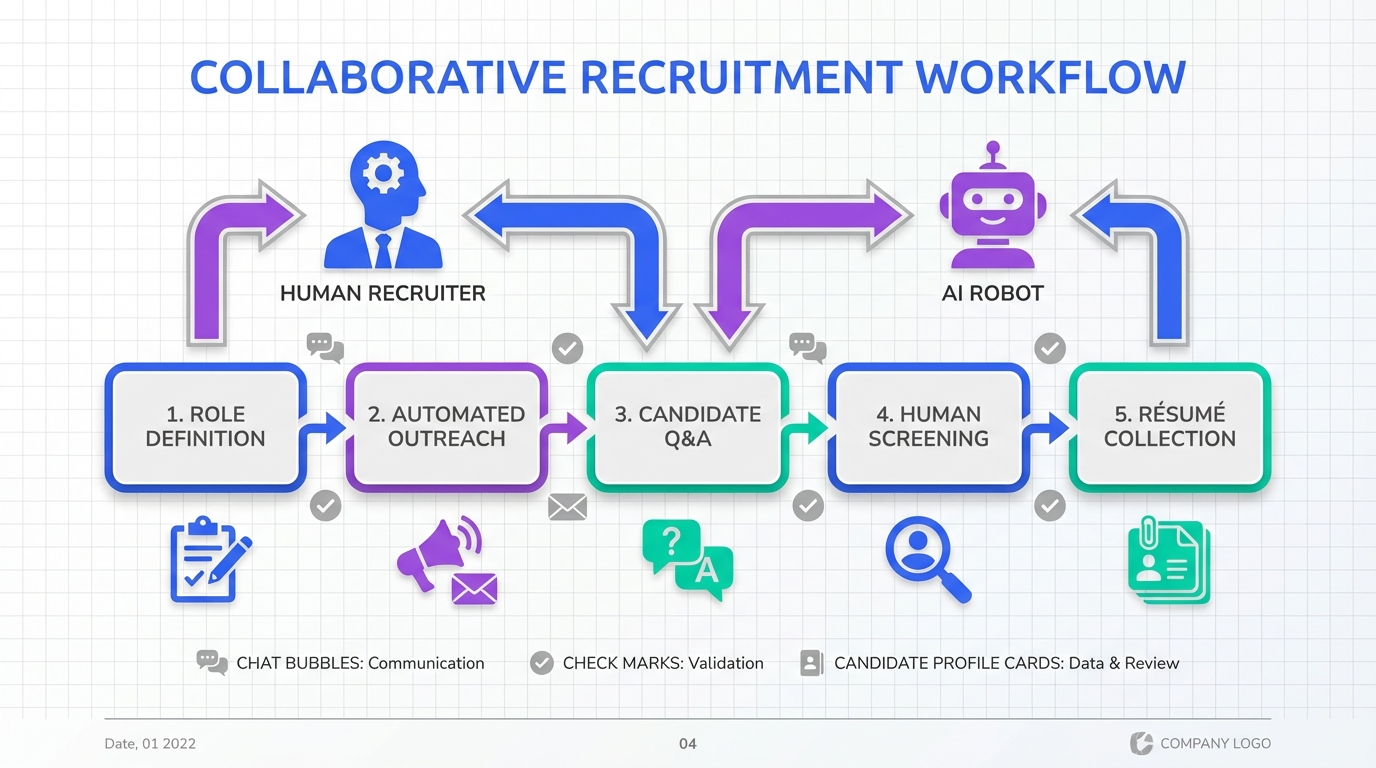
In our experience implementing online recruiting workflows, the biggest time sink is not writing one job post. It is the repeated cycle of connecting, introducing the role, answering the same questions, following up, and collecting résumés and contact details. StrategyBrain AI Recruiter is designed to automate that initial LinkedIn outreach and qualification layer while keeping the recruiter responsible for final evaluation.
Practically, that means the AI can introduce the opportunity, learn the candidate’s situation, answer questions about the role, company, and compensation, confirm interview interest, and collect résumés and contact information from interested candidates. Recruiters then review the collected résumés and move qualified candidates into interviews.
Organizational development and strategic HR
Slutsky describes a continued shift: HR is increasingly valued by leadership, and HR consultants are often engaged by the President to work on issues tied to organizational direction. The post Covid period accelerated this shift, partly through health and safety compliance and partly through broader strategic resets.
Online recruiting implication: your process is part of your strategy
When HR becomes strategic, recruiting becomes a visible operating system, not a back office function. For recruiters, this changes how you present the role and the company online. Candidates interpret your response speed, clarity, and consistency as signals of how the organization runs.
This is where automation can be helpful if it improves consistency. A well configured AI outreach workflow can ensure every candidate gets timely responses and follow up, including outside business hours, while still escalating nuanced questions to a human recruiter.
Policy as a recruitment tool
Slutsky notes a shift in how companies use manuals and handbooks. Historically, many organizations kept policy details private until after hiring. She observes that companies are now creating employee handbooks that make some content public, and she has been part of that process three times already in the year of the update.
Online recruiting implication: publish what candidates compare
In recruitment online for recruiters, policy content functions like product marketing. Candidates compare employers, and they want to understand culture, expectations, and how work gets done. If your online presence hides all of that until late stage interviews, you create friction and slow down decision making.
Practical checklist: what to make candidate facing
- Work model: onsite, hybrid, remote, and any location constraints.
- Time off basics: how requests work and what is standard.
- Performance expectations: how goals are set and reviewed.
- Conduct standards: harassment and respectful workplace expectations.
- Growth support: learning budget, mentorship, or project rotation options.
Contract workers: why they rise and when they level off
Slutsky frames contract and freelance work as a response to volatility. As organizations explore new markets and directions, they need new skills. They cannot simply reset the entire workforce due to moral, ethical, and legislative barriers, so they supplement with temporary contractors. She also expects a future leveling off as employers seek consistency and internal teams once revenue is clearer.
Online recruiting implication: segment your funnel by employment type
If you recruit both permanent and contract roles, treat them as different funnels. The candidate questions, risk tolerance, and decision speed differ. Your outreach messaging should reflect that difference, including how you discuss project scope, duration, and conversion possibilities.
Career development as a retention factor
Slutsky emphasizes that job progression is a key reason people stay or leave. She is often called to review organizational charts and structure. Smaller organizations can have limited senior openings, which can push ambitious employees out unless leaders create alternative growth paths.
Online recruiting implication: sell the path, not only the role
Recruiters filling roles online often focus on requirements and responsibilities. Candidates, especially high performers, also evaluate trajectory. If you cannot offer a title ladder, you can still offer skill ladders through professional development, project work, and cross functional exposure.
Compensation, job evaluation, and misconduct investigations
Slutsky reports that companies are increasingly formalizing pay rates to remain competitive. She also highlights the need to assign correct compensation through benchmarking and total rewards evaluation that is both external and internal.
She also notes that misconduct investigations remain a significant part of HR work. Policies defining bullying, harassment, diversity, and inclusion are increasingly specific, while employee understanding does not always keep pace, which makes investigations complex.
Online recruiting implication: clarity reduces churn and risk
- Compensation clarity reduces late stage drop off and renegotiation cycles.
- Role clarity reduces misalignment that leads to early attrition.
- Conduct clarity supports a safer workplace and reduces reputational risk.
A practical online recruiting playbook for recruiters
Below is a field tested structure we use to translate HR trend themes into day to day execution. It is designed for recruiters working in staffing recruiter jobs and staffing agency recruiter jobs, as well as in house teams running LinkedIn sourcing at scale.
Step 1: Define the role in human language before you automate
- Write a one sentence outcome that explains what success looks like in 90 days.
- List 5 must have signals you can verify in a résumé or conversation.
- List 5 deal breakers to avoid wasting candidate time.
This step aligns with Slutsky’s warning: AI can draft content, but only a human who understands the job can keep the process on course.
Step 2: Make policy and expectations visible early
- Publish a short handbook style summary of culture and ways of working.
- Standardize your compensation explanation so every candidate gets the same baseline information.
- Document your process stages so candidates know what happens next.
Step 3: Use AI to scale outreach and follow up, then keep humans for judgment
StrategyBrain AI Recruiter is built for LinkedIn hiring automation. When configured with your job opening details, company context, compensation, benefits, and candidate search criteria, it can handle the repetitive front end of recruitment online for recruiters.
- Automate connection and introduction to candidates who match your targeted search criteria.
- Automate Q and A about the role, company, and compensation so candidates get timely answers.
- Automate interest confirmation by asking whether the candidate wants to proceed.
- Collect résumés and contact details from interested candidates for recruiter review.
Step 4: Build a contractor lane and a permanent lane
Because contract work often rises during market shifts, create two message tracks and two screening tracks. Contractors typically want clarity on scope, timeline, and rate structure. Permanent candidates typically want clarity on growth, stability, and total rewards.
Step 5: Add a retention narrative to your outreach
Career development is not only an HR program. It is a recruiting asset. Include one concrete development mechanism in your outreach, such as mentorship, training budget, or project rotation, and be prepared to explain how it works in practice.
Quick Comparison: Manual LinkedIn Outreach vs AI Assisted Outreach
| Dimension | Manual recruiter led | AI assisted with StrategyBrain AI Recruiter |
|---|---|---|
| Initial outreach volume | Limited by recruiter time | Scales through automated connect and messaging workflows |
| Response coverage | Business hours dependent | 24/7 multilingual candidate communication |
| Candidate Q and A | Repeated manual explanations | Automated answers based on recruiter provided role and company details |
| Final qualification | Recruiter decision | Recruiter decision, AI does not determine full résumé match |
| Data handling | Varies by process | Designed with encrypted credentials and customer data isolation per product documentation |
FAQ
What does recruitment online for recruiters mean in practice?
It means running sourcing, outreach, screening, and candidate communication through digital channels such as LinkedIn and email, with clear process stages and measurable follow up. The goal is to increase speed and consistency without sacrificing role understanding and human judgment.
Is AI replacing recruiters in online recruitment?
No. In Judy Slutsky’s view, AI can be helpful, but human oversight is still key because someone must understand the job and edit outputs before using them. Tools like StrategyBrain AI Recruiter automate repetitive outreach and early qualification, while recruiters keep responsibility for final screening and hiring decisions.
How does StrategyBrain AI Recruiter help with LinkedIn recruiting?
It automates connecting with candidates, introducing job opportunities, answering questions about the role, company, and compensation, confirming interview interest, and collecting résumés and contact details. Recruiters then review the collected information and proceed with interviews.
Can StrategyBrain AI Recruiter qualify candidates for fit?
It can identify willingness to communicate or interview, but it does not determine whether a candidate’s résumé fully matches job requirements. Recruiters complete that final qualification step after reviewing the résumé.
Why are companies making policies more public during hiring?
Slutsky describes it as marketing: employees want to compare companies, and public facing handbook content helps communicate culture and how work is done. In online recruiting, this reduces uncertainty and speeds up candidate decisions.
Why are contract workers so common right now?
According to Slutsky, companies exploring new markets and skills often supplement staff with temporary contractors because they cannot reset the entire workforce due to moral, ethical, and legislative barriers. Contractors also help employers test the waters before committing to long term payroll.
What should recruiters highlight online to improve retention?
Career development. Slutsky notes job progression is a key reason people stay or leave, so recruiters should communicate realistic growth paths such as professional development, project work, or skill expansion, not only the immediate job duties.
How should compensation be handled in online recruiting?
Slutsky emphasizes benchmarking and competitiveness in total rewards, evaluated both externally and internally. For recruiters, the practical move is to standardize how compensation is explained early so candidates can make informed decisions.
What is the biggest risk of using AI generated job postings?
The risk is treating AI output as final. Slutsky’s warning is that someone must fundamentally understand the job and edit before posting, otherwise the process can drift away from what the business actually needs.
Conclusion and next steps
Recruitment online for recruiters is moving toward higher expectations for speed, clarity, and consistency, while HR becomes more strategic and policy becomes more candidate facing. Judy Slutsky’s update is a reminder that AI can accelerate recruiting work, but it cannot replace role understanding or responsible oversight.
Next steps: document your role requirements in plain language, publish the policy and culture details candidates compare, and then use automation to scale outreach and follow up. If LinkedIn sourcing is a major channel for your team, evaluate StrategyBrain AI Recruiter as a way to automate the initial outreach and qualification workflow while keeping recruiters focused on final screening and interviews.