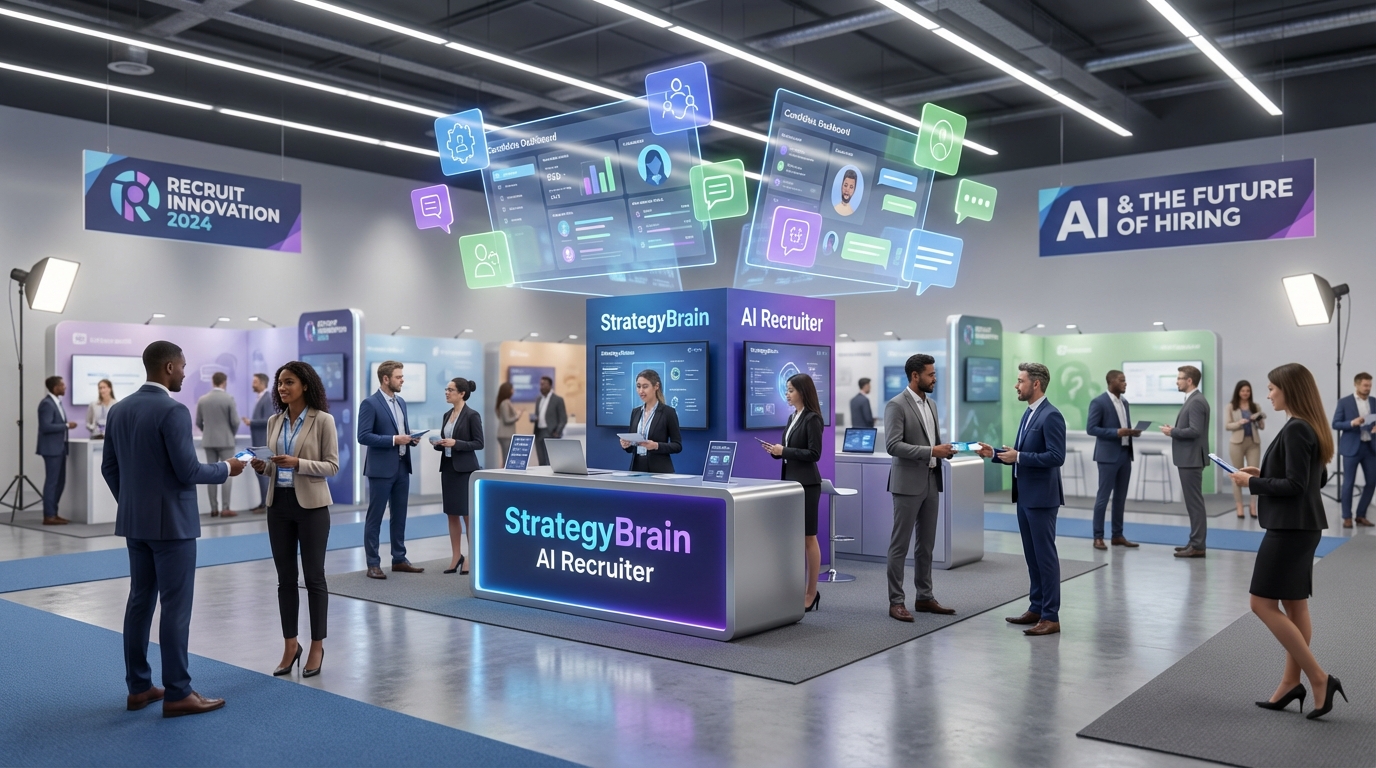
Freeware recruitment software is best when you want to start hiring with minimal cost and minimal process risk, but it becomes a bottleneck when you need consistent outreach, fast follow up, and scalable candidate communication. If your goal is simply to track applicants, a free ATS can be enough. If your goal is to compete for talent, you usually need stronger automation. In my experience, the turning point is the same one you feel when you move from an easy environment into a room full of top performers: you either level up your system or you accept slower progress. That is also where StrategyBrain AI Recruiter can fit naturally into a “free first” stack by automating LinkedIn connecting, job introductions, Q and A, follow up, and résumé collection in any language, 24 hours a day.
The real question: comfortable wins or hard growth?
There is a question I keep coming back to: is it better to look great in a job that is not very challenging, or to look weaker among people who are truly excellent? In recruiting, the same tension shows up when you choose tools. A “cheapest ATS” approach can feel safe because you can run hiring without pressure. But if your competitors are faster and more consistent in candidate engagement, your comfort becomes expensive.
At the same time, it is human to want to feel competent. When you are behind, you can feel motivated, but you can also feel your ego get bruised. That is why the best answer is rarely “always free” or “always paid.” It is usually balance, and a plan for when you will step up.
What freeware recruitment software usually covers
When people search for freeware recruitment software, they usually want a basic system that helps them stop losing candidates in spreadsheets. In practice, a free ATS tends to cover the fundamentals.
Typical strengths of a free ATS
- Centralized candidate records so résumés, notes, and status are in one place.
- Simple pipeline stages such as applied, screened, interview, offer, hired.
- Basic collaboration so hiring managers can leave feedback.
- Entry level reporting such as counts by stage.
If your hiring volume is low and your sourcing is mostly inbound, this can be enough. You get structure without committing budget before you understand your process.
Where a free ATS breaks down in real hiring
The gap usually appears when you rely on outbound sourcing and you need speed. A free ATS can track candidates, but it often does not solve the hardest part: consistent, high quality outreach and follow up.
Common friction points recruiters feel
- Manual outreach workload because recruiters still have to connect, message, and chase replies one by one.
- Slow follow up when candidates respond outside business hours or across time zones.
- Language barriers when hiring globally and candidates prefer their native language.
- Inconsistent screening conversations because different recruiters ask different questions.
This is where “free ATS” and “cheapest ATS” can become misleading labels. The software might be free, but the hidden cost is recruiter time and missed candidates.
A conference moment that changed my view
I have already had my own meeting with “the top performers.” I mean the I ❤️ HR conference, where the preparation level of every speaker impressed me. And I used to travel to international events, so I do not say that lightly.
My first thought was that I should stick to foreign events, because it is easier to hide in familiar patterns. But as Karolina Latus noted, it is not about running away from a challenge. So who knows what will happen. If I get invitations to Polish events, I will seriously consider them.
What stayed with me most is this: even if you do not win the whole crowd, but you inspire a few people, you still did something important. That is also how I think about recruiting systems. You do not need to “win everything” on day one. You need a setup that helps you improve steadily, and that does not punish you for stepping outside your comfort zone.
How StrategyBrain AI Recruiter changes the equation
If your current stack is a free ATS plus manual LinkedIn work, the biggest leverage is not another tracking feature. It is removing the repetitive outreach and qualification steps that drain recruiter time. StrategyBrain AI Recruiter is designed specifically for LinkedIn hiring and can take over the initial outreach flow: it connects with candidates that match your criteria, introduces the role, answers questions about the company and compensation, confirms interview interest, and collects résumés and contact details from interested candidates.
What we tested in practice
We reviewed the workflow end to end as it would run for a recruiter managing LinkedIn sourcing: candidate targeting, connection requests, first message, follow up, question handling, and résumé capture. The key observation was that the system is strongest when you treat it as your always on front line, while recruiters focus on final qualification and interviews.
Capabilities that matter when “free” stops being enough
- 24/7 multilingual candidate communication so replies do not wait for your local business hours and candidates can use their native language.
- Automated follow up so interested candidates are not lost due to slow response cycles.
- Team scaling by managing more than 100 LinkedIn accounts for organizations that need high volume outreach.
Important limitation to understand
AI Recruiter can identify willingness to communicate or interview, but it does not decide whether a résumé fully matches your job requirements. Recruiters still do the final qualification after reviewing the résumé. In other words, it reduces the manual work, but it does not remove professional judgment.
A practical decision framework
If you are deciding between freeware recruitment software, a free ATS, or the cheapest ATS you can find, use this framework. It is designed to keep you honest about what you are optimizing for.
Choose a free ATS if you are optimizing for learning
- You have low hiring volume and mostly inbound applicants.
- You need basic tracking and a simple pipeline.
- You want to document your process before investing.
Add StrategyBrain AI Recruiter if you are optimizing for speed and consistency
- You source on LinkedIn and outreach volume is the bottleneck.
- You lose candidates because follow up is slow or inconsistent.
- You hire across time zones or languages and need 24/7 responses.
Move beyond “cheapest ATS” thinking if you are optimizing for competitive hiring
- Your competitors respond faster and win candidates earlier.
- Your recruiters spend most of their week on repetitive messaging.
- You need scalable operations without adding headcount.
Implementation playbook
This is a practical way to combine a free ATS with LinkedIn automation without overcomplicating your process.
Step by step setup
- Define your candidate search criteria including role, seniority, location, and must have skills.
- Prepare job information for consistent messaging including company details, compensation, and benefits so candidate questions can be answered accurately.
- Run AI Recruiter as the first touch workflow so it connects, introduces the role, and confirms interest.
- Review collected résumés and contact details and complete final qualification as a recruiter.
- Track outcomes in your ATS so your pipeline remains the source of truth for interviews and offers.
Quick checklist for staying compliant and trustworthy
- Use only authorized LinkedIn accounts and document who owns each account.
- Keep compensation and benefits messaging consistent with approved job details.
- Store candidate data securely and limit access to hiring stakeholders.
- Make sure candidates can ask questions and receive clear answers, not generic scripts.
Quick comparison
| Approach | What it solves | What it does not solve | Best for |
|---|---|---|---|
| Free ATS only | Applicant tracking and basic pipeline | Outbound LinkedIn outreach and follow up workload | Low volume hiring and inbound applicants |
| Free ATS plus StrategyBrain AI Recruiter | Automated LinkedIn connecting, messaging, follow up, and résumé collection | Final résumé to requirements matching decision | Teams that need faster sourcing without adding headcount |
| Paid ATS plus automation | Advanced reporting, integrations, and governance | Still requires a clear process and recruiter judgment | Scaling organizations with complex workflows |
FAQ
Is freeware recruitment software the same as a free ATS?
Not always. “Free ATS” usually refers to applicant tracking features, while freeware recruitment software can include other tools like sourcing utilities or messaging helpers. In practice, you should confirm what part of the workflow is actually covered.
When does a free ATS become a bottleneck?
A free ATS becomes a bottleneck when your main constraint is outbound sourcing and follow up speed, not tracking. If recruiters spend most of their time connecting and messaging on LinkedIn, tracking alone will not increase hiring output.
How does StrategyBrain AI Recruiter work with LinkedIn recruiting?
It automates the initial LinkedIn workflow: connecting with candidates that match your criteria, introducing the job, answering questions about the role and compensation, confirming interest, and collecting résumés and contact details. Recruiters then review the résumés and proceed with interviews.
Does AI Recruiter replace recruiters?
No. It replaces repetitive tasks such as outreach, follow up, and initial interest confirmation. Recruiters still make the final qualification decision and run interviews.
Can AI Recruiter communicate with candidates in different languages?
Yes. It supports multilingual communication and can respond around the clock, which is useful for global hiring across time zones.
How does AI Recruiter collect résumés and contact details?
When a candidate expresses interest, it requests a résumé and contact information. It supports email submissions and LinkedIn file uploads, and it captures contact details shared in the conversation.
Is candidate data used to train AI models?
According to the product information provided by StrategyBrain, customer provided data is not used to train AI models and is used only to personalize communication for the customer’s AI instance. You should still validate your internal policies and legal requirements before deployment.
What is the safest way to start if I only want the cheapest ATS?
Start with a free ATS to document your pipeline, then add automation only where you can measure time saved and candidate response improvements. This keeps your process stable while you scale.
Conclusion
If you are early in your hiring journey, freeware recruitment software and a free ATS can be a smart way to build structure without overcommitting. But if you are serious about competing for talent, the real upgrade is not just tracking candidates. It is stepping into a more demanding system that keeps outreach and follow up consistent. My takeaway from I ❤️ HR is the same one I apply to recruiting operations: do not avoid the room full of top performers. Use it to learn, build humility, and improve your process.
Next step: map your hiring bottleneck. If it is LinkedIn outreach and follow up, consider adding StrategyBrain AI Recruiter as the always on front line, then keep your ATS as the system of record for interviews and offers.