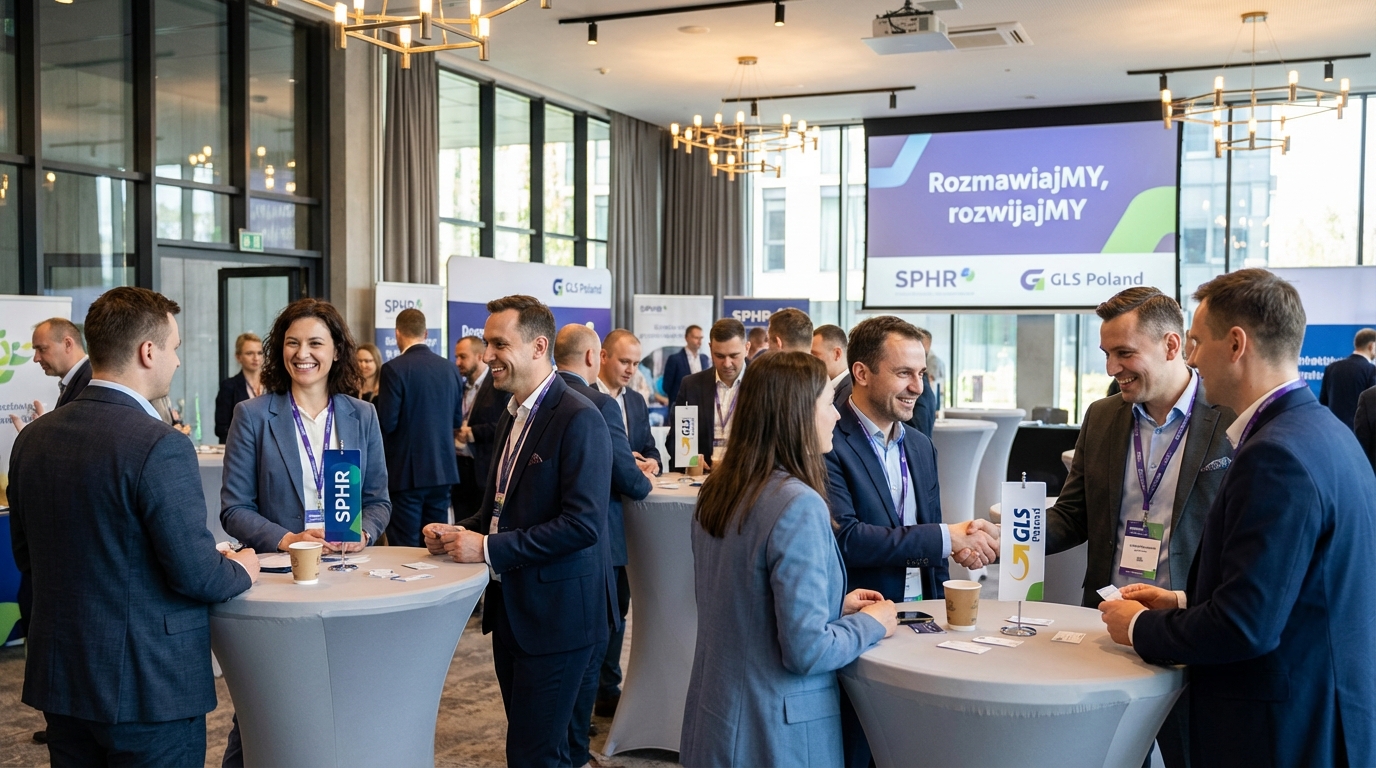
Recruitment online for recruiters is not only about tools and channels. It is about the quality of conversations at scale. Today, during a webinar hosted by SPHR (formerly PSZK), I listened to Aleksandra Borkowska talk about the “RozmawiajMY, rozwijajMY” program run at GLS Poland. What excited me was how a complex, multi level initiative stayed simple enough to execute and still delivered results confirmed by survey outcomes and an award granted by PSZK. Below I translate the most practical ideas from that session into online recruiting actions, including how to hire a job recruiter or work with a remote recruiting agency, and where StrategyBrain AI Recruiter can remove repetitive LinkedIn outreach work without removing the human tone.
What I heard in the webinar
In the SPHR webinar, Aleksandra Borkowska described the GLS Poland program “RozmawiajMY, rozwijajMY.” Three points stayed with me because they were both ambitious and operational.
- It was comprehensive but felt simple to run. That combination is rare. The outcomes were supported by survey results and recognized with an award granted by PSZK.
- They moved from evaluation conversations to development conversations. The shift was not cosmetic. It was tied to building a culture of feedback and appreciation, which participants found genuinely inspiring for modern organizational culture.
- The program ran across levels and areas, but stayed coherent. We heard about workshops and trainings, plus an ambassador program. Keeping those elements aligned is difficult in a large organization, and that is exactly why it stood out.
I needed a moment to cool down after the session because it was one of those talks that makes your brain run at full speed. If you missed it live, the speaker encouraged people to use the PSZK knowledge base to watch the recording, and to check the PSZK calendar for more sessions with HR practitioners.
Why this matters for recruitment online for recruiters
Online recruiting fails most often when the process becomes a sequence of disconnected messages. Candidates experience it as noise, and recruiters experience it as endless follow ups. The webinar reminded me that the fix is not “more messages.” The fix is a better conversation model that is consistent, repeatable, and measurable.
That is relevant whether you are an in house recruiter, someone trying to hire a job recruiter for a hard role, or a remote recruiting agency building pipeline across time zones. In all cases, you need a system that supports development style dialogue, not only screening style interrogation.
How to apply it to online recruiting
Shift 1: From evaluating to developing
In performance management, moving from “I rate you” to “I help you grow” changes the tone immediately. In recruiting, the equivalent is moving from “prove you qualify” to “let’s explore fit and next steps.” You still qualify, but you do it through clarity and mutual discovery.
- What to say early: role context, what success looks like, and what the process will be.
- What to ask early: what the candidate wants next, what constraints they have, and what would make the role worth considering.
- What to avoid: long lists of requirements without explaining priorities.
Shift 2: Build feedback into the process
A feedback culture works when it is frequent and specific. Recruitment online for recruiters benefits from the same rule. Candidates do not need “generic updates.” They need short, concrete signals that the process is moving.
- Set expectations in the first message. Share the next step and the decision timeline you can actually keep.
- Use micro feedback after each step. Confirm receipt of a résumé, confirm interview interest, confirm what happens next.
- Close loops. If the answer is no, say no with one reason that is job related and respectful.
This is where automation can help, but only if it preserves the human tone. StrategyBrain AI Recruiter is designed to handle the repetitive parts of LinkedIn recruiting: it can automatically connect with candidates who match your search criteria, introduce the opportunity, answer common questions about the role, company, and compensation, and confirm interview interest. When a candidate wants to proceed, it collects résumés and contact details so the recruiter can focus on review and interviews.
Shift 3: Multi level, one story
GLS Poland ran workshops, trainings, and an ambassador program under one coherent umbrella. In recruiting, you can mirror that by aligning sourcing, outreach, screening, and handoff to hiring managers under one narrative.
- Sourcing level: define what “target profile” means in plain language, not only keywords.
- Outreach level: use a consistent message structure that explains why you reached out and what the candidate can expect.
- Screening level: keep questions tied to success criteria, not trivia.
- Handoff level: summarize candidate intent, constraints, and next steps in a standard format.
Where StrategyBrain AI Recruiter fits in a LinkedIn workflow
If you are operating like a remote recruiting agency or supporting multiple roles at once, the bottleneck is usually the first 20 percent of the funnel: connecting, introducing, answering repetitive questions, and following up. StrategyBrain AI Recruiter targets that exact bottleneck.
- Smart LinkedIn recruitment automation: connects with candidates, introduces the role, learns their situation, answers questions, and confirms interview interest.
- 24/7 multilingual communication: responds and follows up across time zones in the candidate’s native language, which reduces misunderstandings.
- Scalable team operations: supports managing more than 100 LinkedIn accounts so organizations can build AI powered recruiting teams.
Important boundary: the system can identify willingness to communicate or interview, but it does not decide whether a résumé fully matches the job requirements. That final qualification remains a recruiter decision, which is the right place for human judgment.
Quick checklist you can copy
- Conversation goal is clear: I can explain the next step in 1 sentence.
- Message structure is consistent: why them, why now, what next.
- Feedback loops exist: receipt confirmed, interest confirmed, next step confirmed.
- Follow up is scheduled: at least 2 follow ups are planned before I call it “no response.”
- Automation is scoped: AI handles outreach and Q&A, recruiter handles final fit.
Quick comparison
| Approach | Speed impact | Consistency | Best for |
|---|---|---|---|
| Manual LinkedIn outreach only | Depends on recruiter capacity | Varies by person and workload | Low volume roles, highly bespoke outreach |
| Templates plus strict process | Faster than fully manual | High if enforced | Teams standardizing recruitment online for recruiters |
| StrategyBrain AI Recruiter plus recruiter review | High for top of funnel tasks | High with defined inputs and guardrails | Remote recruiting agency workflows, multi role pipelines, global hiring |
FAQ
Is this article only for corporate HR teams?
No. The webinar example comes from a large organization, but the principles apply to solo recruiters, agencies, and anyone doing recruitment online for recruiters who needs consistent conversations and follow up.
How does a feedback culture relate to candidate outreach?
Feedback culture is about frequent, specific signals. In recruiting, that translates to clear timelines, short updates after each step, and closing loops instead of leaving candidates guessing.
When should I hire a job recruiter instead of doing it myself?
Hire a recruiter when the role is business critical, time sensitive, or requires specialized sourcing networks. If you cannot sustain consistent outreach and follow up, your funnel will stall even with strong inbound interest.
What should I expect from a remote recruiting agency?
You should expect documented process, clear communication cadence, and measurable pipeline reporting. If they cannot explain how they manage follow ups across time zones, you will likely see drop off in candidate engagement.
What does StrategyBrain AI Recruiter automate on LinkedIn?
It automates connecting with candidates, introducing job opportunities, answering common questions about the role and company, confirming interview interest, and collecting résumés and contact details from interested candidates.
Does StrategyBrain AI Recruiter replace recruiter judgment?
No. It can identify willingness to communicate or interview, but it does not determine whether a résumé fully matches job requirements. Recruiters still make the final qualification decision.
Can it support global hiring?
Yes. It provides 24/7 multilingual communication so candidates can interact in their native language, which helps reduce misunderstandings and delays across time zones.
How does it handle data privacy?
According to the product documentation provided for this brief, customer provided data is not used to train AI models, credentials are encrypted, and candidate data is encrypted and isolated per customer.
What is one practical next step I can take today?
Rewrite your first outreach message into a development style invitation: clarify success criteria, ask what the candidate wants next, and state the next step and timeline. Then decide which parts of follow up can be safely automated.
Conclusion
The SPHR webinar with Aleksandra Borkowska reminded me that big results often come from simple, coherent systems. GLS Poland’s “RozmawiajMY, rozwijajMY” worked because it replaced evaluation style conversations with development style conversations and reinforced feedback and appreciation across levels. If you apply the same logic to recruitment online for recruiters, you get clearer outreach, better follow up, and fewer stalled processes. If your bottleneck is LinkedIn top of funnel work, StrategyBrain AI Recruiter can automate connecting, introducing, Q&A, and résumé collection so you can spend your time on human judgment and interviews. Next step: pick one role, standardize the conversation flow, and measure response rate and interview interest for 14 days.