Building a personal brand online is one of the most reliable ways to get discovered by recruiters who rely on recruiting and applicant tracking software plus social networks to source and screen talent. The practical approach is simple: pick a narrow niche, make your LinkedIn profile and content consistently prove that niche, and engage with the right people every week. This article also explains how do applicant tracking systems work at a high level, and what a what is applicant tracking system resume question really means in practice, so your brand and your resume reinforce each other instead of competing.
Why personal branding matters in modern recruiting workflows
Investing time in a personal brand can feel intimidating, but it creates leverage. A personal brand is the image others see of you and how you present yourself publicly. It can grow without effort, but the outcome may not match your goals. When you intentionally shape it, you make it easier for recruiters and hiring managers to understand what you do, what you are good at, and where you fit.
In practice, recruiters use social networks daily to search for, connect with, and recruit talent. That means your online presence is often evaluated before your first interview. If your profile and posts clearly communicate your specialty, you reduce ambiguity and increase the chance of getting a message that matches your goals.
How recruiting and applicant tracking software fits into discovery
Recruiting and applicant tracking software is a category of tools that helps teams manage the hiring funnel, from sourcing and outreach to applications, screening, interviews, and offers. An Applicant Tracking System (ATS) is the part of that stack that stores candidate records and tracks stages such as applied, screened, interviewed, and hired.
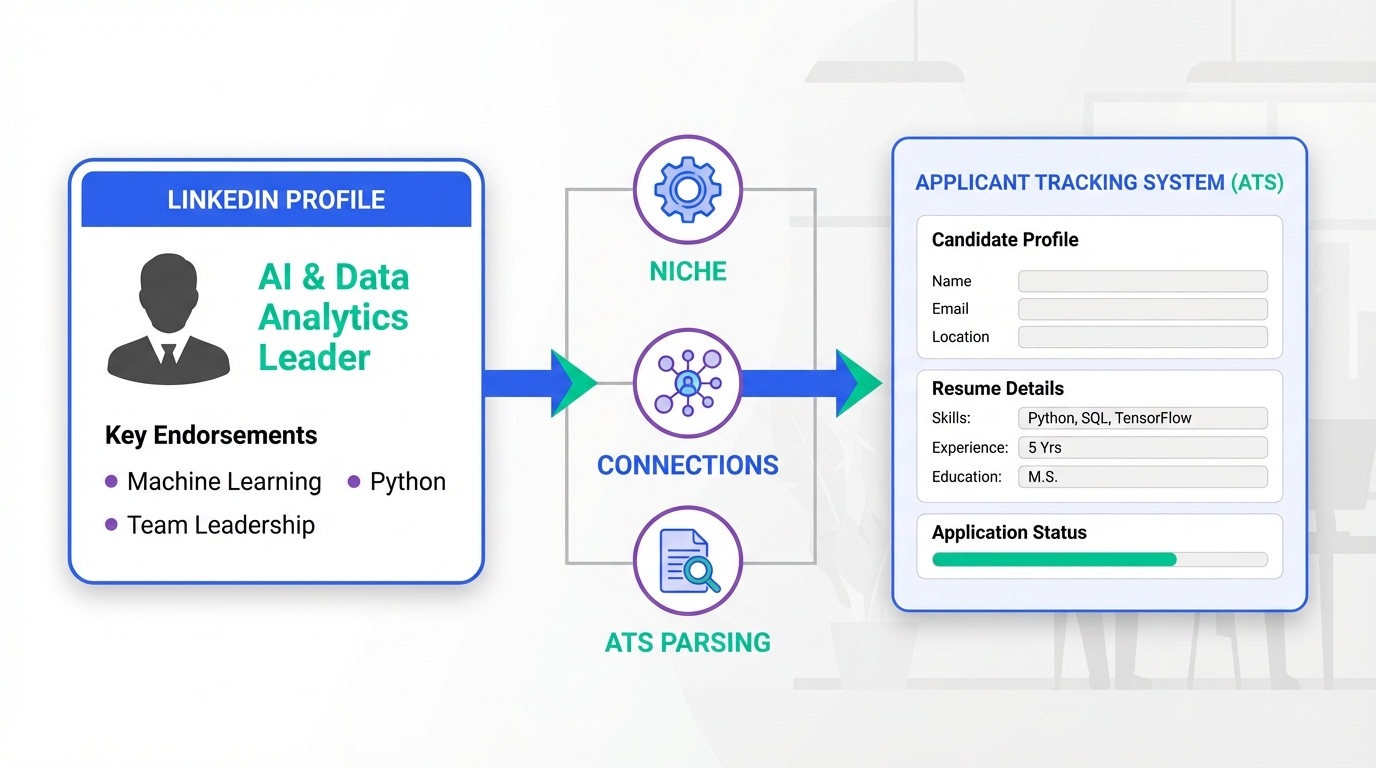
So, how do applicant tracking systems work in the context of your personal brand? They do not replace your public presence. Instead, they amplify it. Recruiters often discover you on LinkedIn or other channels, then move your information into their system. If your brand is clear, the recruiter can tag you correctly, route you to the right role, and advocate for you internally with less friction.
Method 1: Find your niche and make it obvious
The most common mistake in personal branding is trying to appeal to everyone. A stronger strategy is to narrow your focus and be specific about the professional problem you solve. When your niche is clear, your content becomes easier to plan and your profile becomes easier to interpret.
Steps
- Pick one primary lane that you want to be hired for, such as a function, industry, or problem type.
- Write a one sentence positioning statement that explains who you help and how.
- Align your profile sections so headline, about, experience, and featured items all support the same story.
- Collect proof such as projects, outcomes, writing samples, or talks that demonstrate competence.
Features
- Higher recruiter relevance because your profile matches specific searches.
- More consistent content because you are not switching topics every week.
- Clearer referrals because others can describe you accurately.
Limitations
- It can feel restrictive if you are exploring multiple career directions at once.
- It requires saying no to content that does not support your positioning.
Best For
- Job seekers who want to be found for a specific role type.
- Professionals pivoting into a new specialty who need a coherent narrative.
Method 2: Connect like a professional networker
Once your niche is defined, the next step is to connect with the people and communities in that niche. You can do this across many platforms, but LinkedIn is often the most direct path because it is widely used by recruiters and HR teams.
Steps
- Choose your primary platform and commit to maintaining it weekly.
- Identify target groups such as hiring managers, practitioners, and community leaders in your niche.
- Send thoughtful connection requests that reference shared context, not generic templates.
- Engage consistently by commenting with substance and asking relevant questions.
This is where automation in recruiting becomes relevant. Tools like StrategyBrain AI Recruiter can automate initial LinkedIn outreach and follow up for recruiting teams, which means candidates may receive faster messages and more structured screening questions. For you, that raises the bar on clarity. Your profile needs to answer common questions quickly, including what you do, what you are looking for, and what evidence supports your claims.
Limitations
- Networking takes time and results compound over weeks, not days.
- Low effort outreach is easy to ignore, especially when recruiters use automation at scale.
Method 3: Share content that signals competence
Social media is not only about posting your own content. It is also about joining a conversation. Comment on relevant posts, share useful resources, and add your perspective. Visual content can increase engagement, so consider adding images or short videos when appropriate.
Steps
- Pick 3 content themes that map to your niche and rotate them.
- Post one proof item per week, such as a mini case study, a lesson learned, or a process breakdown.
- Engage daily for 10 minutes by leaving thoughtful comments on relevant posts.
- Track what resonates and double down on formats that attract the right conversations.
Practical template: weekly content checklist
- [ ] One post that demonstrates expertise with a concrete example
- [ ] Two comments that add a specific insight or alternative approach
- [ ] One connection request to a relevant person with a personalized note
- [ ] One profile update that improves clarity, such as headline or featured work
Method 4: Be authentic and consistent
Authenticity matters because your audience can tell when your voice is forced. Your online voice should blend professional insight with your natural personality. Staying consistent builds trust over time, and trust is what turns visibility into opportunities.
Consistency also helps in systems. When recruiters move your information into recruiting and applicant tracking software, they often summarize you in a few tags and notes. If your brand is coherent, those notes are more likely to reflect what you want, and less likely to misclassify you.
ATS resume basics: what an applicant tracking system resume needs
If you have ever asked what is applicant tracking system resume, the practical answer is this: it is a resume formatted and written so an ATS can parse it reliably and a recruiter can scan it quickly. ATS platforms typically extract fields like name, title, dates, employers, skills, and education. If the parsing fails, your information can land in the wrong place or look incomplete.
ATS friendly resume rules that usually hold up
- Use simple section headings such as Experience, Skills, Education.
- Avoid complex layouts like multi column designs that can break parsing.
- Use standard job titles when possible, and clarify internal titles in parentheses.
- Mirror role language honestly by using relevant keywords that match your real experience.
How your personal brand supports ATS screening
- Brand creates demand by making recruiters want to contact you.
- Resume creates eligibility by making your experience easy to validate and route.
- Consistency reduces doubt when your LinkedIn story matches your resume story.
Where StrategyBrain AI Recruiter changes the game on LinkedIn
Recruiting teams increasingly use AI to handle repetitive LinkedIn tasks such as connecting, introducing roles, answering common questions, and collecting resumes and contact details. StrategyBrain AI Recruiter is designed for that workflow. It can run outreach and follow up continuously, communicate in a candidate’s native language, and support scaling across many LinkedIn accounts for organizations that need high volume sourcing.
From a candidate perspective, this changes what gets rewarded. Fast, clear responses and a profile that answers predictable questions become more important because the first interaction may be structured and immediate. If you want to benefit from this shift, make sure your profile clearly states your niche, your location and work authorization status if relevant, and the type of roles you are open to. Then keep your resume ready to share quickly when asked.
One important boundary is that AI Recruiter can help qualify interest and collect materials, but final fit assessment still depends on a human reviewing your resume and experience. That is another reason your brand and your ATS friendly resume should reinforce each other.
Quick comparison: brand signals vs resume signals
| Signal | Where it shows up | What it influences | How to improve it |
|---|---|---|---|
| Positioning clarity | LinkedIn headline and About | Whether a recruiter understands you in 10 seconds | One niche, one sentence value statement, consistent proof |
| Search relevance | Recruiter searches and filters | Whether you appear in sourcing results | Use accurate titles, skills, and industry terms you truly have |
| ATS parse quality | Resume upload into ATS | Whether your record is complete and readable | Simple headings, single column layout, clean dates |
| Response readiness | Messaging on LinkedIn | Whether outreach converts into interviews | Keep a current resume, short intro, and availability details |
FAQ
How do applicant tracking systems work for job seekers?
Applicant Tracking Systems store your application as structured data and move it through stages such as applied, screened, and interviewed. They often parse your resume into fields, which is why formatting and clear section headings matter.
What is an applicant tracking system resume in plain terms?
It is a resume written and formatted so an ATS can reliably extract your experience, dates, skills, and education. A simple single column layout with standard headings is usually easier for systems and recruiters to read.
Does personal branding help if companies use recruiting and applicant tracking software?
Yes. Your brand helps you get discovered and trusted before you ever apply. Once you are in the system, a clear brand also helps recruiters summarize and route you correctly.
Should I focus on LinkedIn or a personal website?
If you are choosing one place to start, LinkedIn is typically the most recruiter facing channel. A personal website can help later as a portfolio, but it should not replace a strong LinkedIn profile.
How often should I post to build a credible brand?
Consistency matters more than volume. One strong post per week plus a few thoughtful comments is enough to build momentum over time.
What changes when recruiters use AI automation on LinkedIn?
You may receive faster outreach and more structured questions. That makes it important to keep your profile clear, respond promptly, and have an ATS friendly resume ready to share.
What does StrategyBrain AI Recruiter do in the recruiting workflow?
It automates initial LinkedIn outreach and follow up, introduces roles, answers common questions, and collects resumes and contact details from interested candidates. Recruiters then review the collected materials and decide who to interview.
Will AI Recruiter decide if I am qualified for the job?
No. It can confirm interest and gather information, but final qualification depends on a recruiter reviewing your resume and experience against the role requirements.
Conclusion
A strong personal brand helps you stand out in a world where recruiters use recruiting and applicant tracking software plus social platforms to find and screen candidates. The fastest path is to define a niche, connect intentionally, share proof based content, and stay authentic and consistent. Next, make sure your resume is ATS friendly so your story survives parsing and internal handoffs. If you want to be ready for modern LinkedIn outreach, including AI assisted workflows like StrategyBrain AI Recruiter, tighten your profile clarity and keep your resume and availability details ready to send.