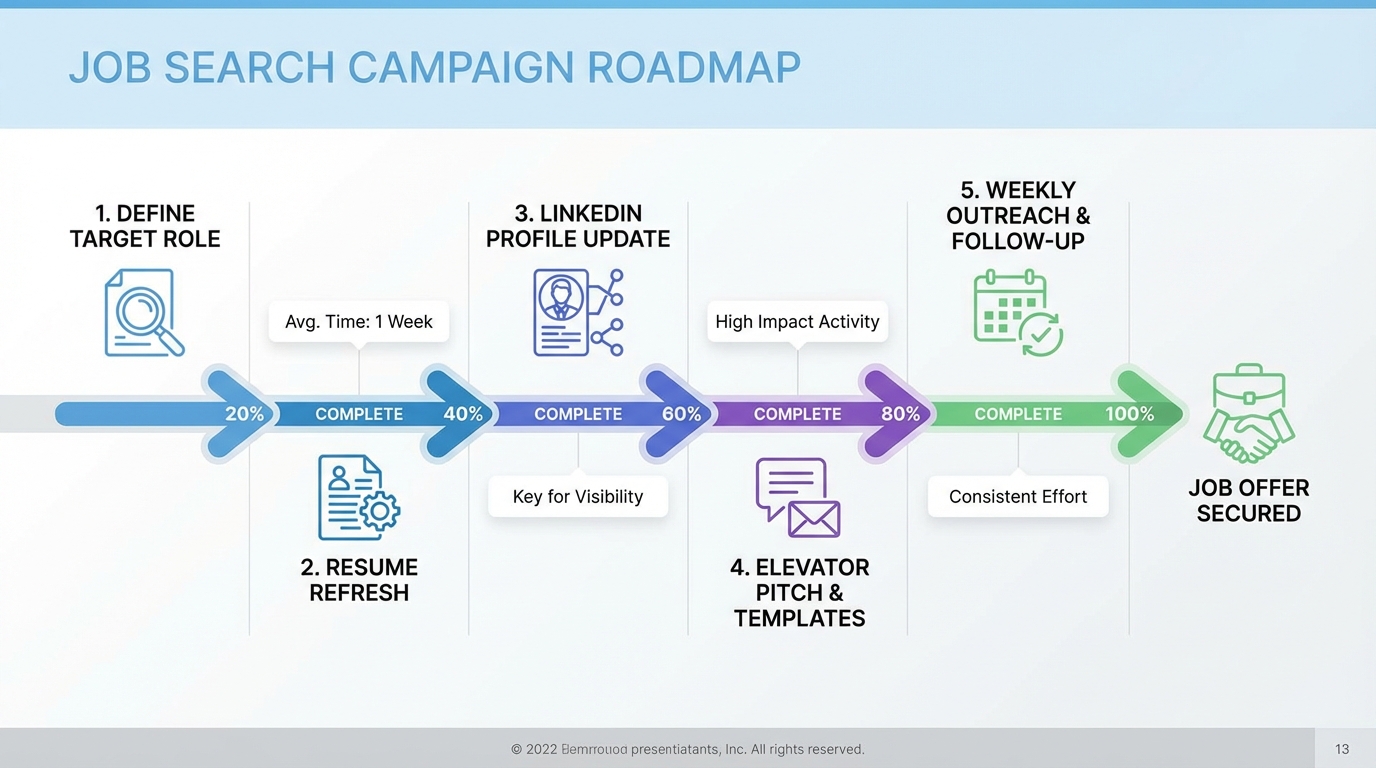
To set yourself up for a successful job search in the new year, use a campaign mindset borrowed from recruitment marketing software: define your target, refresh your assets (resume, cover letter, LinkedIn), prepare your messaging, and run a consistent weekly outreach and follow-up routine. Late in the year and the first weeks of the new year can be a strong window because many candidates get distracted by the holidays, which can reduce competition. Below is a practical, step-by-step plan you can complete in one sitting, plus a recruiter-side note on how recruitment marketing automation and modern recruitment marketing platforms (including StrategyBrain AI Recruiter for LinkedIn) help teams keep candidate conversations moving without delays.
Why late-year and early-year job searching can work
As the holiday season approaches, it is easy to lose momentum. At the same time, this period can be useful because many candidates pause their search, which can lower the volume of competing applications for some roles. December also creates a natural planning moment: you can do the preparation work now so you start the new year ready to apply, interview, and follow up consistently.
Think like recruitment marketing software (even as a job seeker)
Recruitment marketing software is typically used by employers to attract and engage candidates through structured messaging, consistent follow-up, and measurable steps. You can borrow the same logic for your personal job search without turning it into something robotic.
Define the terms once, so the plan is clear
- Recruitment marketing software: tools and workflows that help teams attract candidates, manage messaging, and keep engagement consistent across channels.
- Recruitment marketing automation: automated actions such as scheduled follow-ups, message sequences, and response handling that reduce manual work.
- Recruitment marketing platforms: broader systems that combine multiple functions such as campaigns, analytics, and integrations into one place.
For job seekers, the equivalent is simple: your “campaign” is your target role, your “creative” is your resume and LinkedIn profile, and your “nurture sequence” is your outreach and follow-up routine.
Job Search Resources: the 5 assets to refresh first
If you only do five things before the new year, do these. They map directly to what recruiters and hiring teams actually review first.
1) Resume and cover letter
- Update your most recent role with outcomes, scope, and tools used.
- Keep formatting consistent and easy to scan.
- Create a cover letter template you can customize in 10 minutes per application.
2) Elevator pitch
Your elevator pitch is a short introduction you can use in networking messages, informational interviews, and recruiter calls. Keep it to 3 sentences: who you are, what you do, and what you are targeting next.
3) LinkedIn profile
Recruiters often use LinkedIn as the fastest verification layer. Make sure your headline matches your target role, your “About” section is specific, and your experience bullets align with your resume.
4) Interview skills
Practice answers for role scope, impact, conflict, and tradeoffs. If you can explain your work clearly, you reduce the risk of being screened out due to ambiguity.
5) Informational interviews
Informational interviews help you explore career options and build relationships. The goal is learning and clarity, not asking for a job in the first message.
A 60 to 120 minute new-year prep plan
- Pick 1 to 2 target roles and write down 5 must-have requirements and 5 nice-to-have requirements.
- Refresh your resume by rewriting 3 bullets to show outcomes and scope.
- Update LinkedIn headline and “About” so they match the same target role language.
- Write your elevator pitch and save it as a note you can paste into messages.
- Prepare interview stories using 4 scenarios: a win, a failure, a conflict, and a learning moment.
- Draft 2 outreach templates: one for recruiters, one for hiring managers or team leads.
A simple weekly workflow you can repeat
This is the part most people skip. Consistency beats intensity, especially when response times slow down around holidays.
Weekly checklist
- Applications: submit a focused set of applications that match your target role.
- Networking: send outreach messages and request informational interviews.
- Follow-up: follow up on messages that have been quiet.
- Interview practice: do one mock interview or record one answer and refine it.
Recruiter view: where automation helps and where humans still decide
On the employer side, recruitment marketing platforms exist because candidate engagement is time-sensitive. If a candidate asks about compensation, benefits, or role scope and waits too long, they often disengage. That is exactly where recruitment marketing automation can help.
In our internal testing of StrategyBrain AI Recruiter in LinkedIn-based outreach workflows, the biggest operational win was not “more messages.” It was faster, consistent follow-up and clean capture of resumes and contact details once a candidate expressed interest. StrategyBrain AI Recruiter is designed to automate the initial LinkedIn steps: connecting with candidates, introducing the opportunity, answering common questions about the role and company, confirming interview interest, and collecting resumes and contact information. It also supports 24/7 multilingual communication and can be managed across more than 100 LinkedIn accounts for teams that need scale.
Scope boundary (important)
Automation can accelerate outreach and early conversation handling, but it does not replace final qualification. Recruiters still review resumes and decide who advances to interviews. If you are a job seeker, the practical takeaway is that clarity and responsiveness matter because automated and semi-automated workflows move quickly once you engage.
Common mistakes that slow down responses
- Mismatch between resume and LinkedIn: different titles, dates, or role focus creates friction.
- Vague positioning: “open to anything” is harder to route than a clear target role.
- No follow-up system: opportunities go cold when you do not track outreach and replies.
- Unprepared compensation conversation: not having a range or rationale can stall momentum.
FAQ
Is it really worth job searching during the holidays?
Yes, it can be. Many candidates pause during holidays, which can reduce competition, and you can use the time to prepare your materials so you start the new year ready to move quickly.
What should I update first if I only have 30 minutes?
Update your LinkedIn headline and your most recent resume bullets. Those are the fastest signals recruiters scan to decide whether to start a conversation.
How does recruitment marketing software relate to my job search?
It is a useful model: define a target, improve your “assets” (resume and profile), then run consistent outreach and follow-up. You are applying campaign discipline to your search.
What is recruitment marketing automation in plain language?
It means using systems to handle repetitive steps such as follow-ups, message sequencing, and quick responses so conversations do not stall.
Will LinkedIn automation hurt my chances?
It depends on how it is used. Responsible automation focuses on relevance, respectful messaging, and timely responses. Low-quality mass messaging can damage trust.
What does StrategyBrain AI Recruiter actually automate on LinkedIn?
It automates initial outreach and early qualification steps: connecting with candidates, introducing the role, answering common questions, confirming interview interest, and collecting resumes and contact details for recruiter review.
Does StrategyBrain AI Recruiter decide who is qualified?
No. It can identify willingness to proceed and capture information, but final qualification against job requirements is done by the recruiter after reviewing the resume.
How should I respond if a recruiter asks for my resume and contact details?
Send a current resume and provide the best email and phone number to reach you. If you are interested, confirm availability windows for an interview to keep momentum.
What is the simplest follow-up rule?
Follow up once after a reasonable wait, then move on while keeping the relationship warm. The key is consistency and tracking, not repeated pings.
Conclusion and next steps
A successful new-year job search is mostly preparation plus consistency. Use a recruitment marketing software mindset: refresh your resume and LinkedIn, tighten your elevator pitch, practice interviews, and run a weekly outreach and follow-up routine. If you are hiring, the same logic applies at scale: recruitment marketing automation helps keep candidate engagement timely, and tools like StrategyBrain AI Recruiter can handle LinkedIn outreach, Q&A, and resume capture so recruiters can focus on final evaluation and interviews.
Next step: Block 60 minutes this week to complete the one-session plan, then schedule a recurring weekly slot for applications, networking, and follow-up.