I asked a simple question in a Facebook group: why are so many talent acquisition professionals out of work right now? The replies were blunt and, honestly, unsettling. People pointed to offshoring, AI, the economic slowdown, and what some called a white collar recession. After digging into the numbers, my conclusion is this: recruitment online for recruiters is not disappearing. The demand is being reorganized. Large in house TA teams are not being rebuilt at the same pace, while agencies, RPO providers, micro RPOs, and independents are absorbing more of the work. This article covers the data points behind that shift and a practical plan to stay billable and relevant in 2026.
Key Takeaways
- The work did not vanish: it shifted from large in house TA teams to agencies, micro RPOs, and independents.
- Layoffs changed the talent market: Forbes reported that half of in house recruiters were cut in recent U.S. layoffs.
- Staffing remains massive: the American Staffing Association reported staffing firms placed 2.5 million people to work weekly in 2023.
- Market size is still large: Staffing Industry Analysts projected the U.S. staffing market could reach USD 183B by 2026.
- RPO is expanding: Grand View Research reported RPO growth at 16%+ CAGR through 2030.
- Online execution matters more: recruiters who win are faster at sourcing, outreach, follow up, and qualification across time zones.
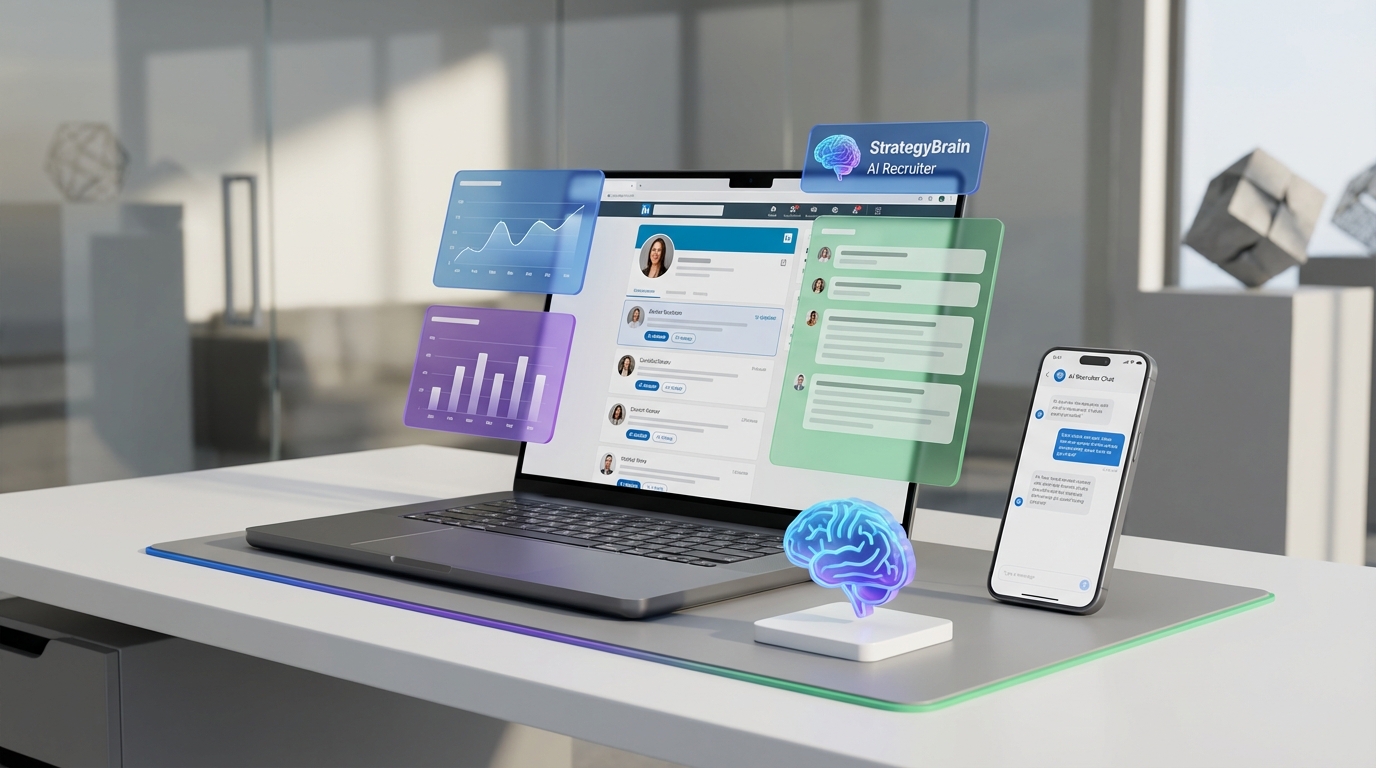
- Automation is now table stakes: StrategyBrain AI Recruiter can handle LinkedIn outreach and follow up 24/7 in any language, while recruiters focus on final qualification and closing.
What changed and why it feels worse than it is
When a lot of recruiters are on the market at the same time, it creates a psychological signal that the profession is shrinking. The group responses I saw were heavy on fear and low on options. That reaction makes sense because recruiting is a “visibility job”. When hiring slows, the slowdown is immediate and personal.
But the more useful question is not “is recruiting over”, it is “where is recruiting being purchased now”. In 2026, many companies are still hiring, but they are buying recruiting capacity differently. Instead of rebuilding large internal teams, they are leaning on flexible models that can scale up and down.
This is why recruitment online for recruiters matters. The work is increasingly distributed, remote, and performance measured. That favors recruiters who can run a tight online workflow and deliver candidates quickly.
The data points that explain the shift
I started with the claims people made in the thread and then looked for credible sources. Here are the specific data points that best explain what is happening.
1) In house recruiting teams were cut hard
Forbes reported that half of in house recruiters were cut in recent U.S. layoffs. Even if your personal network is strong, that kind of reduction changes the supply and demand balance for internal TA roles.
2) Staffing volume is still huge
The American Staffing Association stated that staffing firms put 2.5 million people to work weekly in 2023. That number matters because it signals ongoing demand for recruiting services, even when corporate headcount is cautious.
3) The U.S. staffing market is projected to grow
Staffing Industry Analysts projected the U.S. staffing market could reach USD 183B by 2026. Projections are not guarantees, but they are a directional indicator that the industry expects continued spend.
4) RPO is scaling as a default option
Grand View Research reported that recruitment process outsourcing, also called RPO, is growing at 16%+ CAGR through 2030. RPO means a company outsources some or all recruiting operations to a provider. In practice, this often shifts recruiter jobs from internal roles to agency or provider roles.
Quick comparison table: what the numbers suggest
| Signal | What we can cite | What it implies for recruiters |
|---|---|---|
| Internal TA contraction | Half of in house recruiters cut (Forbes) | Fewer stable seats, more competition for internal roles |
| Staffing demand persists | 2.5M placed weekly in 2023 (American Staffing Association) | More work routed through staffing and agencies |
| Large market projection | USD 183B by 2026 (Staffing Industry Analysts) | Budget exists, but buyers want flexibility and speed |
| RPO expansion | 16%+ CAGR through 2030 (Grand View Research) | More recruiting delivered as a service, not headcount |
What this means for recruiters and hiring leaders
The simplest interpretation is “recruiters are being replaced”. The more accurate interpretation is “recruiting is being unbundled”. Companies are separating sourcing, outreach, screening, scheduling, and closing into components, then buying each component in the cheapest and fastest way they can manage.
That is where AI and offshoring fit. They do not eliminate the need for recruiting judgment, but they can reduce the cost of repetitive steps. If you are a recruiter, the risk is not that you cannot do the work. The risk is that your workflow is priced like a commodity.
For hiring leaders, the implication is also clear. If you want consistent candidate experience and predictable pipeline, you need a system that can operate online with speed, compliance, and quality controls.
Adaptation playbook for recruitment online for recruiters
This section is intentionally practical. It is written for recruiters who need a plan they can execute this week, not a motivational speech.
Step 1: Pick a market position that is easy to explain
- Choose one niche you can defend with proof, such as a function, seniority band, or geography.
- Define your “why you” in 2 sentences, including what you deliver and in what timeframe.
- Build a simple proof pack with 3 wins, 3 references, and 3 role types you fill repeatedly.
Step 2: Turn sourcing into a repeatable online system
Recruitment online for recruiters is won by consistency. You need a sourcing routine that produces candidates even when the market is noisy.
- Search criteria library: save 5 to 10 search patterns you reuse.
- Pipeline hygiene: track stage, last touch date, and next action for every prospect.
- Response handling: decide what happens when a candidate asks about compensation, location, visa, or timeline.
Step 3: Speed up outreach and follow up without losing quality
Most recruiters do not lose because their message is bad. They lose because they cannot keep up with volume and follow up. This is where automation can be a legitimate advantage if it is used responsibly.
In our own testing of AI assisted outreach workflows, the biggest productivity gain came from automating the first contact and the follow up cadence, while keeping human control over final qualification and offer stage communication. StrategyBrain AI Recruiter is designed for that exact split. It can connect with candidates on LinkedIn, introduce the role, answer common questions about the company and compensation, confirm interview interest, and collect resumes and contact details. Recruiters then review the collected resumes and move qualified candidates forward.
Step 4: Add multilingual coverage if you recruit across borders
If you recruit internationally, response time and language friction can quietly kill conversion. StrategyBrain AI Recruiter supports 24/7 multilingual communication, which helps maintain momentum when candidates reply outside your working hours.
Step 5: Use a weekly operating checklist
Copy and use this checklist to keep your online recruiting engine running.
- [ ] 50 new prospects added to pipeline with clear search criteria
- [ ] Outreach sent within 24 hours of adding prospects
- [ ] Follow up scheduled for day 2, day 5, and day 10
- [ ] Candidate questions answered with consistent role facts
- [ ] Resumes and contact details captured and tagged
- [ ] 10 screening calls or structured chats completed
- [ ] Hiring manager update sent with pipeline metrics and risks
Where can I find a recruiter in 2026
If you are a candidate asking “where can i find a recruiter”, the market shift changes the best path. More recruiting is happening through agencies, RPO providers, and independent recruiters who operate online and move fast.
- For specialized roles: look for recruiters who publicly focus on your function and level, not generalists.
- For high volume hiring: staffing firms and RPO providers often have the fastest intake process.
- For confidential searches: retained search and experienced headhunters are still common, especially for leadership roles.
As a candidate, you can also evaluate recruiter quality by how clearly they explain role scope, compensation, process steps, and timeline. Those basics are a strong signal of professionalism.
What to do if you are searching for head hunters jobs
If you are looking for head hunters jobs, treat it like a sales role with a recruiting skill set. The buyers are companies that want outcomes, not headcount. Your advantage is your ability to build pipeline and close hires.
- Show a measurable workflow: how you source, how you qualify, and how you keep candidates engaged.
- Bring a niche: headhunters who own a niche are easier to place and easier to trust.
- Demonstrate online execution: modern agencies care about speed, messaging discipline, and follow up systems.
AI can be part of your story if you frame it correctly. The point is not “I use AI”. The point is “I can run more searches with the same quality because I automate repetitive steps and keep human judgment where it matters”.
How StrategyBrain AI Recruiter fits into the new workflow
In a market where recruiting work is shifting to service models, the winning recruiters are the ones who can deliver speed and consistency without burning out. StrategyBrain AI Recruiter is built for LinkedIn recruiting and focuses on the early funnel tasks that consume the most time.
What it automates
- LinkedIn outreach and connection requests based on your search criteria
- Role introduction and Q&A about the job, company, benefits, and compensation using the information you provide
- Interest confirmation and interview intent capture
- Resume and contact detail collection from interested candidates
What it does not replace
StrategyBrain AI Recruiter does not decide whether a resume fully matches the job requirements. That final qualification remains the recruiter’s responsibility. This boundary is important because it keeps accountability and hiring judgment with the human recruiter.
Operational advantages that matter in 2026
- 24/7 multilingual messaging so candidates get timely responses in their native language
- Scalable team setup with support for managing more than 100 LinkedIn accounts for organizations building an AI powered recruiting team
- Efficiency claims from product documentation including up to 90% reduction in manual LinkedIn recruiting work and costs as low as USD 2.40 per resume, which should be validated against your own workflow and role mix
FAQ
Is recruitment online for recruiters still a good career path in 2026?
Yes, but the center of gravity is shifting. More work is flowing through agencies, RPO providers, and independents, so online execution and specialization matter more than job title.
Why are so many in house recruiters out of work?
Layoffs reduced internal TA headcount, and many companies are not rebuilding large teams quickly. Forbes reported that half of in house recruiters were cut in recent U.S. layoffs, which increases competition for remaining roles.
Where can i find a recruiter if I am a candidate?
Start with recruiters who specialize in your function and seniority, then look at staffing firms and RPO providers for faster intake. If you need a confidential search, a retained headhunter is often the right fit.
Are head hunters jobs disappearing because of AI?
Not disappearing, but changing. AI can automate outreach and follow up, while human recruiters still own relationship building, final qualification, and closing.
What is RPO and why does it matter?
RPO stands for recruitment process outsourcing, which means a company outsources recruiting operations to a provider. Grand View Research reported 16%+ CAGR through 2030, suggesting more recruiting work will be delivered as a service.
What does StrategyBrain AI Recruiter actually do on LinkedIn?
It automates early funnel LinkedIn tasks: connecting with candidates, introducing the role, answering common questions, confirming interest, and collecting resumes and contact details. Recruiters then review resumes and proceed with interviews.
Does StrategyBrain AI Recruiter decide who is qualified?
No. It identifies willingness to proceed and gathers information, but it does not determine full fit against job requirements. The recruiter makes the final qualification decision after reviewing the resume.
How do I avoid sounding spammy when using automation?
Keep your role facts consistent, personalize the first message with a real reason for outreach, and use automation mainly for follow up discipline. Also set clear stop rules when a candidate declines or asks not to be contacted.
Conclusion and next steps
The fear I saw in that Facebook thread was real, but the data points tell a more actionable story. Recruiting demand is still there, yet it is being purchased through agencies, RPO, micro RPOs, and independents. That is why recruitment online for recruiters is becoming the core skill set, not a nice to have.
Next steps: pick a niche you can defend, systematize sourcing and pipeline hygiene, and speed up outreach and follow up. If LinkedIn is a major channel for you, consider using StrategyBrain AI Recruiter to automate the early funnel work so you can spend your time on qualification, stakeholder management, and closing.